
 Book a Demo







NSFR Explained: What It Is and Why It Matters for Banking Regulation
Since its introduction, alongside the LCR, the Net Stable Funding Ratio (NSFR) has gained prominence among regulators and banks worldwide, including...
Explore thought leadership, data-driven analysis, and practical frameworks on ALM and Balance Sheet Management, turning complexity into clarity and confident decisions.


From first principles to machine learning in deposit modeling for balance sheet, interest rate and liquidity risk management. What Are Non-Maturing Deposits? Non-maturing deposits (NMDs), also...
Our Blog
Explore our latest articles covering Balance Sheet Management, ALM, liquidity, financial risk, regulation, and emerging risk technologies.
Liquidity
Since its introduction, alongside the LCR, the Net Stable Funding Ratio (NSFR) has gained prominence among regulators and banks worldwide, including...
 Liquidity
Could a bank survive 30 days without access to new funding? The Liquidity Coverage Ratio (LCR) aims to answer precisely that question. This key...
Insights
Discover the most-read insights on Balance Sheet Management, ALM, liquidity risk, regulation, and emerging financial technologies.
Since its introduction, alongside the LCR, the Net Stable Funding Ratio (NSFR) has gained prominence among regulators and banks worldwide, including...
Could a bank survive 30 days without access to new funding? The Liquidity Coverage Ratio (LCR) aims to answer precisely that question. This key...

Managing a bank's balance sheet implies addressing multiple structural risks, with Interest Rate Risk in the Banking Book (IRRBB) being one of the...
Our Latest Downloadable Content
Access the latest research, practical frameworks, and expert perspectives on Balance Sheet Management, ALM, risk, and regulatory developments.
From first principles to machine learning in deposit modeling for balance sheet, interest rate and liquidity risk management. What Are Non-Maturing...
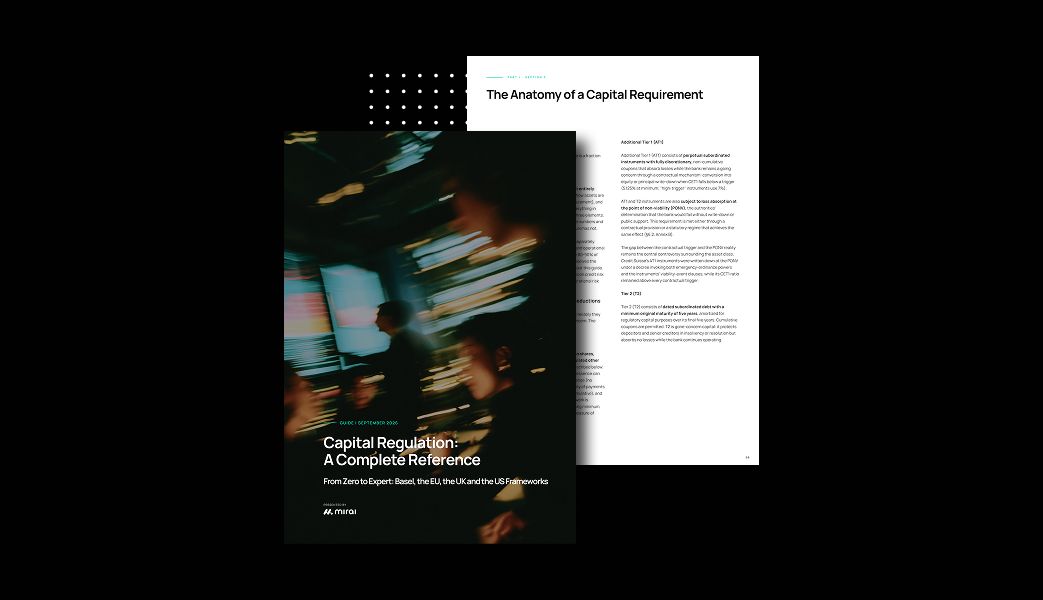
A complete reference for capital planning, regulatory implementation and cross-jurisdictional strategy, from the foundations of bank capital through...
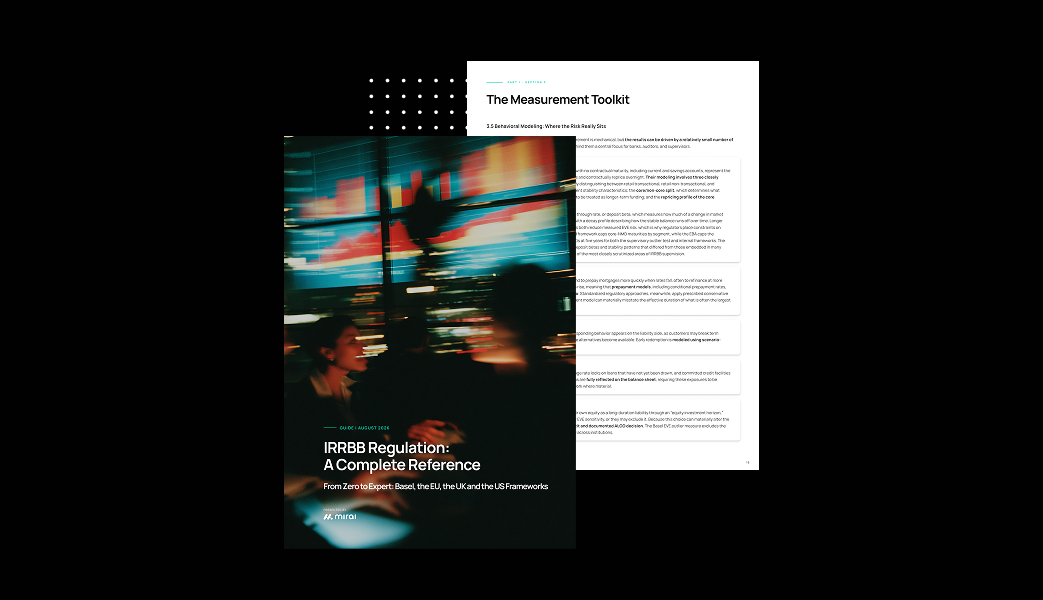
A complete regulatory reference for treasury, ALM, and risk teams navigating interest rate risk in the banking book after the 2024 shock scenario...
Our Blog
Browse our full collection of articles on Balance Sheet Management, ALM, liquidity, risk, regulation, and financial technology.


Most non-maturity deposit models are not wrong because banks use the wrong techniques. They are wrong because they are built in the wrong order: the...

On 9 March 2023, Silicon Valley Bank lost more than $40 billion of deposits in a single day, and its management expected to lose over $100 billion...


For once, the news reaching EU reporting teams is about something being taken away rather than added. In April 2026 the EBA opened a consultation on...

Across the banking industry, assumptions about non-maturity deposits, or non-maturing deposits (NMDs), are usually discussed as methodology....

On most bank balance sheets, the largest liability has no maturity date. Current accounts, savings accounts and instant-access deposits can be...

Silicon Valley Bank held 209 billion dollars in assets, more than double the US liquidity rulebook's statutory floor. It still had no LCR, no NSFR,...


For much of the past decade, liquidity was abundant and readily available at relatively low cost, allowing many banks to focus primarily on meeting...

For fifteen years, one principle has sat at the foundation of liquidity regulation: your buffer has to be your own. The central bank is a backstop,...

ALMM, wSTWF, CFMR, RLAP. Liquidity regulation has its own language, and half the difficulty of getting fluent in it is just remembering what the...

Bank liquidity rules were built for one type of institution. Now the same logic is being written into law for a completely different one: payment...