
 Book a Demo


Different Business Units (organized around lines of defense, departments or other areas) may operate with different organizational and accounting structures. The challenge is keeping those structures flexible without creating fragmented views of the balance sheet.
This brochure explores what it takes to maintain consistent analysis across different Business Units and Charts of Accounts, while keeping those structures connected and preserving the flexibility the organization needs.
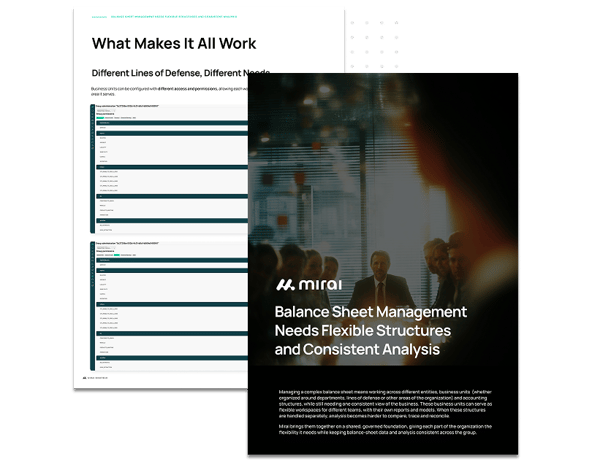
What This Brochure Covers
- Why different Business Units and entities can require different views of the balance sheet, and where those differences can start creating additional mapping, reconciliation and data preparation work.
- How Business Units and Multiple Charts of Accounts can coexist within a Balance Sheet Management environment without creating separate versions of the underlying balance sheet.
- Why consistency does not mean forcing every entity or Business Unit into the same structure, but maintaining a connected basis for comparison, aggregation and analysis.
- How moving from a Group-level position into the relevant Entity, Business Unit, Product or Account helps teams understand the detail behind a result without losing the wider context.
- How connected structures support scenario analysis, allowing changes to be assessed at the relevant level while their impact can still be understood across the wider balance sheet.
If your balance sheet needs to support different perspectives without losing consistency, this brochure will be worth your time.
Prefer a walkthrough? Request a demo with our team of experts.
Who Should Read This Brochure
-
ALCO Chairs, CFOs, and Finance Leadership
-
Treasury Teams
-
ALM / IRRBB Leaders
-
Liquidity Risk Management
- FTP / Profitability Teams
