Book a Demo




How Can Different Organizational and Accounting Structures Work Together Without Creating Fragmented Views of the Balance Sheet?
Banks need their Balance Sheet Management environment to reflect how the organization actually operates. Different entities may have different accounting structures, while different areas of the organization may need their own workspaces for analysis and reporting.
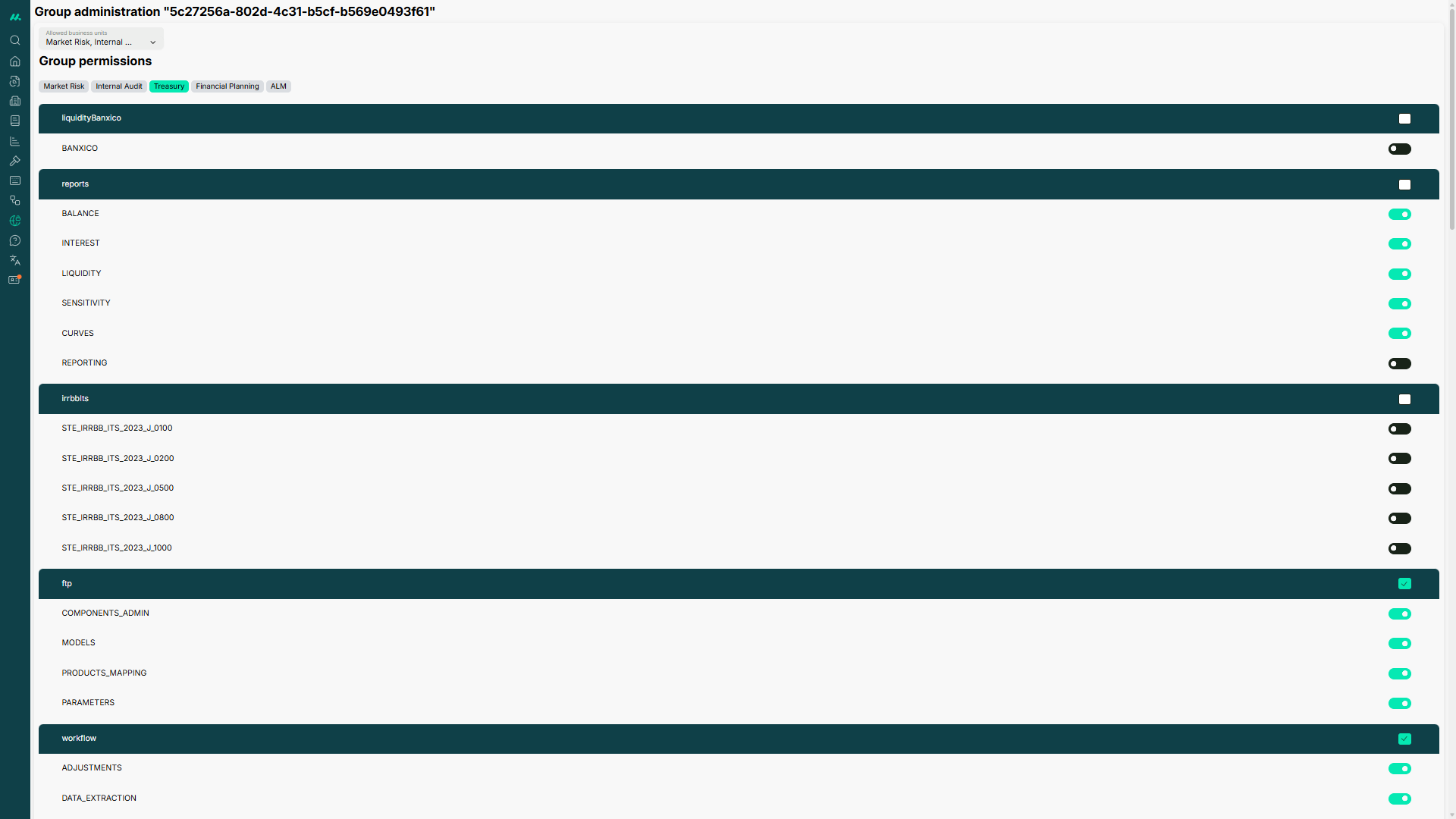
In a Balance Sheet Management environment, these can take the form of Business Units organized around departments, lines of defense or other areas, allowing each workspace to reflect the needs of the area while remaining connected to the wider balance sheet.
At Mirai, we see this as an important part of effective Balance Sheet Management: different structures should be able to coexist without losing the consistency of the analysis built on top of them.
Different Structures Serve Different Purposes
A Business Unit view can provide the level of detail needed to understand a particular area of the business. An entity may need to retain its own accounting structure. At Group level, however, these different perspectives need to come together.
This creates a practical requirement for BSM: the system needs to accommodate different ways of structuring the balance sheet while keeping the relationship between them clear. In Mirai, Business Units can be used to structure and analyze the balance sheet at the level that reflects how the organization is managed, while remaining connected to the wider Group view.
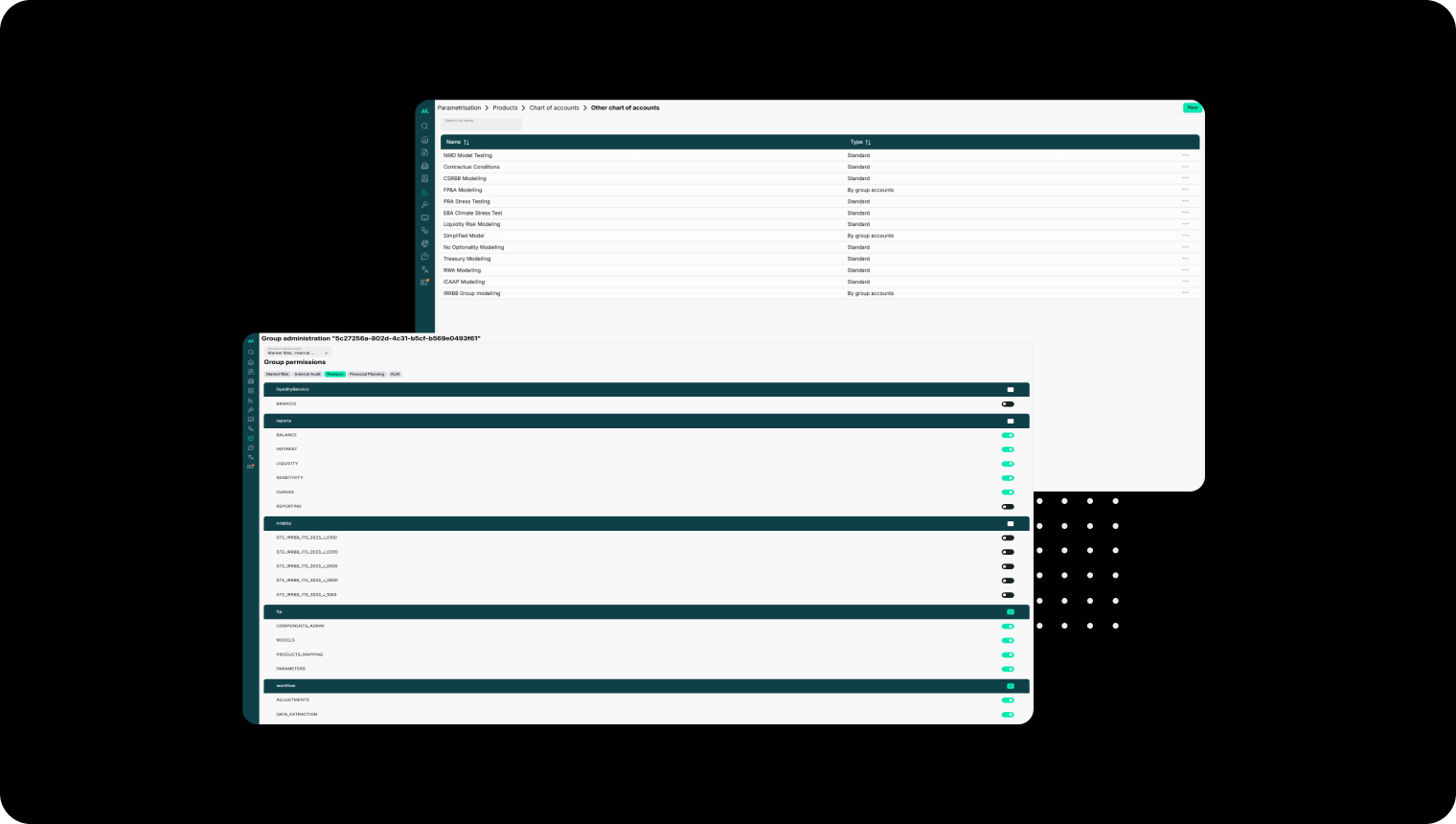
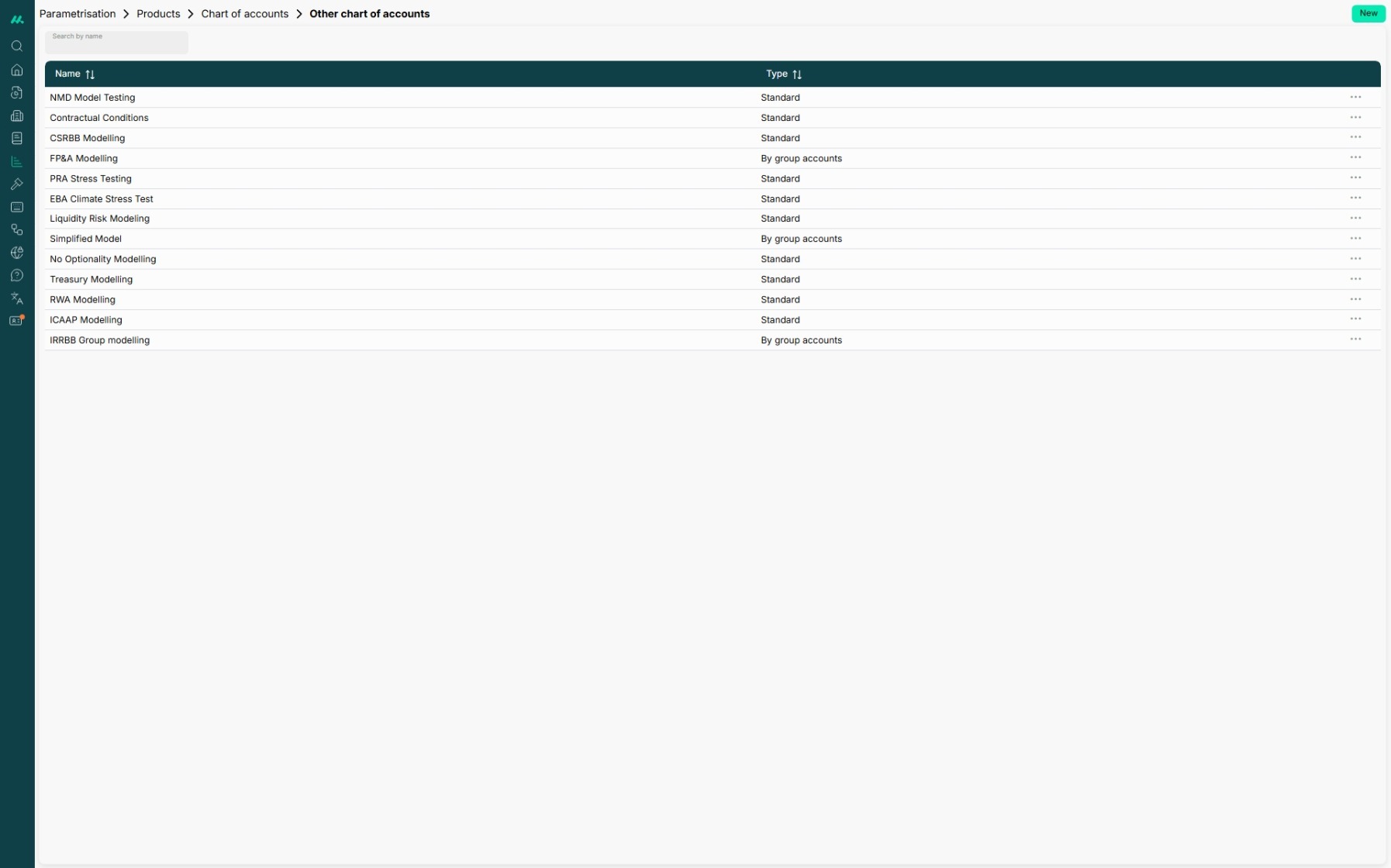
The same applies to Charts of Accounts. Multiple CoAs may reflect the way different entities organize and classify their financial information. The objective is not necessarily to replace those structures with a single one, but to make it possible to work with them consistently within the same balance sheet management environment. Mirai supports multiple Charts of Accounts within the same environment, allowing different accounting structures to coexist without requiring separate analytical setups for each one.
Where Consistency Really Matters
Consistency becomes important when the bank moves from one view to another.
A Group-level position may need to be compared across Business Units or entities. A movement may need to be traced back to the products or accounts behind it. A scenario may need to be applied to one part of the organization and then assessed in the context of the wider balance sheet.
These activities require more than simply having access to the underlying data. The different views need to remain connected.
If they do not, teams can end up spending time mapping, reconciling or preparing data before they can perform the analysis itself.
The Issue Is Not Having Different Structures. It Is Losing the Connection Between Them
This is where being able to move between levels of the balance sheet becomes important. In Mirai, drill-down allows users to move from a high-level result into the relevant Entity, Business Unit, Product or Account, helping them investigate what is driving a position while keeping the different views connected.
Flexibility At the Structure Level, Consistency At the Analytical Level
This distinction is important.
Flexibility allows a Balance Sheet Management environment to reflect the organization as it is, rather than forcing different entities or Business Units into an identical structure.
Consistency means that, despite those differences, the bank can still rely on a common basis for analyzing the balance sheet.
That can include:
-
Data: the underlying information remains connected across different views.
-
Analysis: figures can be compared and aggregated across the organization.
- Traceability: users can move from a high-level result to the detail behind it.
-
Scenarios: changes can be analyzed at the relevant level while their wider impact remains visible.
-
Adaptability: changes to entities, Business Units or reporting structures do not require the balance sheet to be rebuilt from separate data environments.
The balance between these two requirements is what allows different structures to coexist without becoming different versions of the balance sheet.
Mirai brings these principles together by keeping Business Units, multiple Charts of Accounts and the underlying balance sheet analysis within the same environment. This means flexibility can exist in the way the balance sheet is structured without creating a separate analytical foundation for each structure.
Different Views, One Connected Balance Sheet
Consider a change identified at Group level.
The first question may be which Business Unit or entity is driving it. The next may be which products or accounts sit behind the movement. If the bank wants to test a change in that area, the scenario needs to reflect the relevant structure while still allowing its impact to be understood at Group level.
In Mirai, the same balance sheet structure can support this movement from Group-level analysis to detail and into scenario simulation. A change can be modelled at the relevant level while its impact remains connected to the wider balance sheet.
The value comes from being able to move through these levels without treating each one as a separate analytical exercise.
Different perspectives, but connected to the same balance sheet.
What this Means for Balance Sheet Management
Flexibility and consistency do not have to be opposing requirements.
A Balance Sheet Management environment can accommodate different organizational and accounting structures while still providing a consistent basis for analysis, provided those structures remain connected.
This is the approach Mirai takes by bringing Business Units, Multiple Charts of Accounts, shared data, drill-down and scenario analysis together within the same environment.
The result is not one structure imposed across the organization. It is the ability to work with different structures while maintaining a consistent view of the balance sheet.